



| Photo of the month – July 2026 |
[German version] |
Railway wheels on their way to the works:
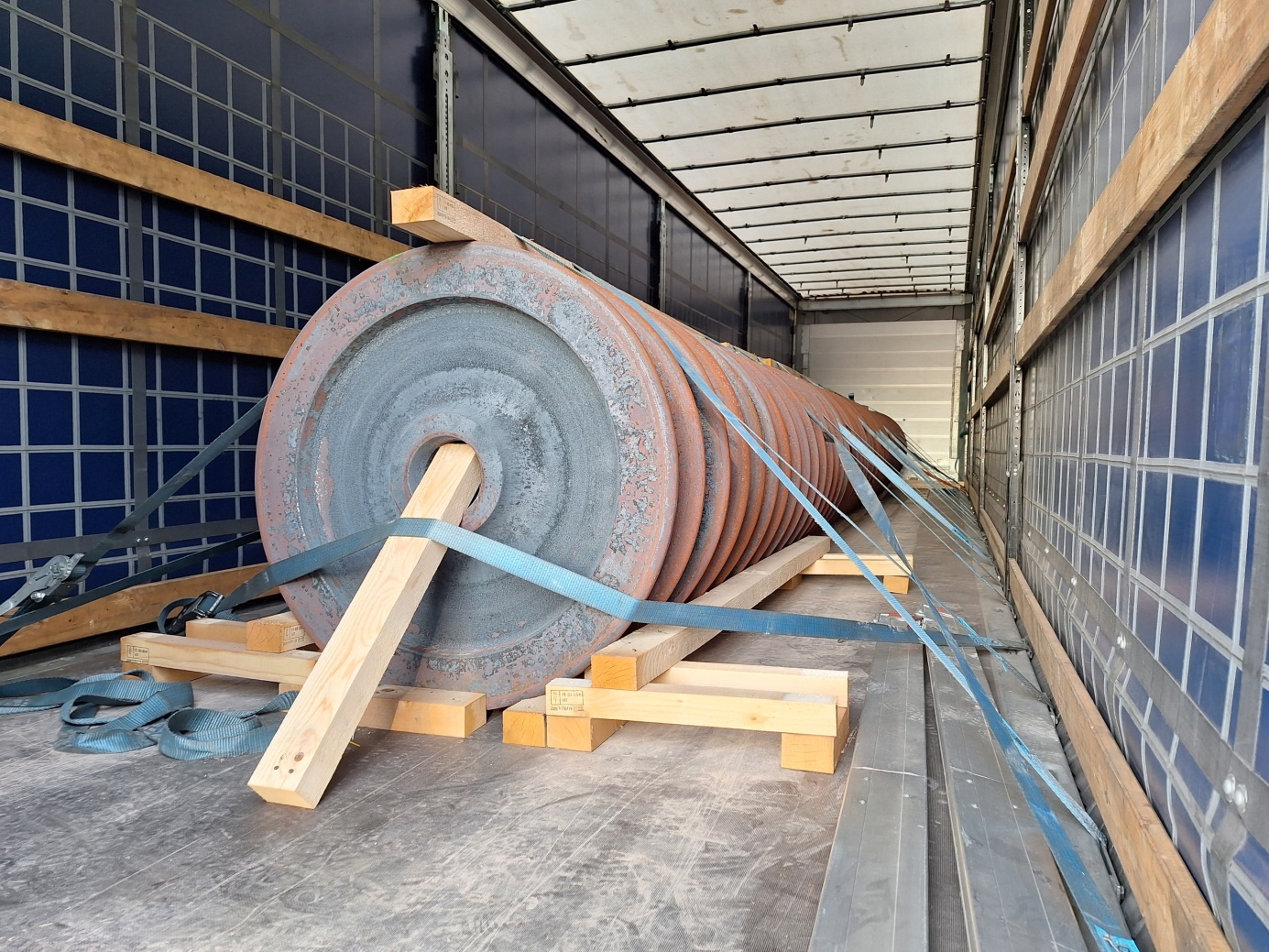
Figure 1 [Raymond Lausberg]
Fifty railway wheels weighing a total of 28,300 kg were being transported from Italy to Belgium
The Italian manufacturer entrusted the task of transporting the cargo to an Italian carrier, which then commissioned a Bulgarian subcontractor to carry out the transport operation. The Italian trailer was towed by a Bulgarian tractor unit.
The vehicle was stopped as part of a traffic control. At first, the inspecting officers noted a number of infringements that did not immediately relate to the way the load was secured:
- The tachograph revealed that the driver had already been doing long-distance international haulage work for nearly two months without returning home.
- What is more, the vehicle exceeded the permitted gross weight of 40 tonnes for cross-border transport by almost three tonnes.
However, in the following, we focus on the load securing arrangements.
As soon as the trailer doors were opened, it became clear that there were significant problems with the way the load was secured.
As Figure 1 shows, the load was supposed to be secured against movement in the longitudinal or transverse direction by means of a timber structure.
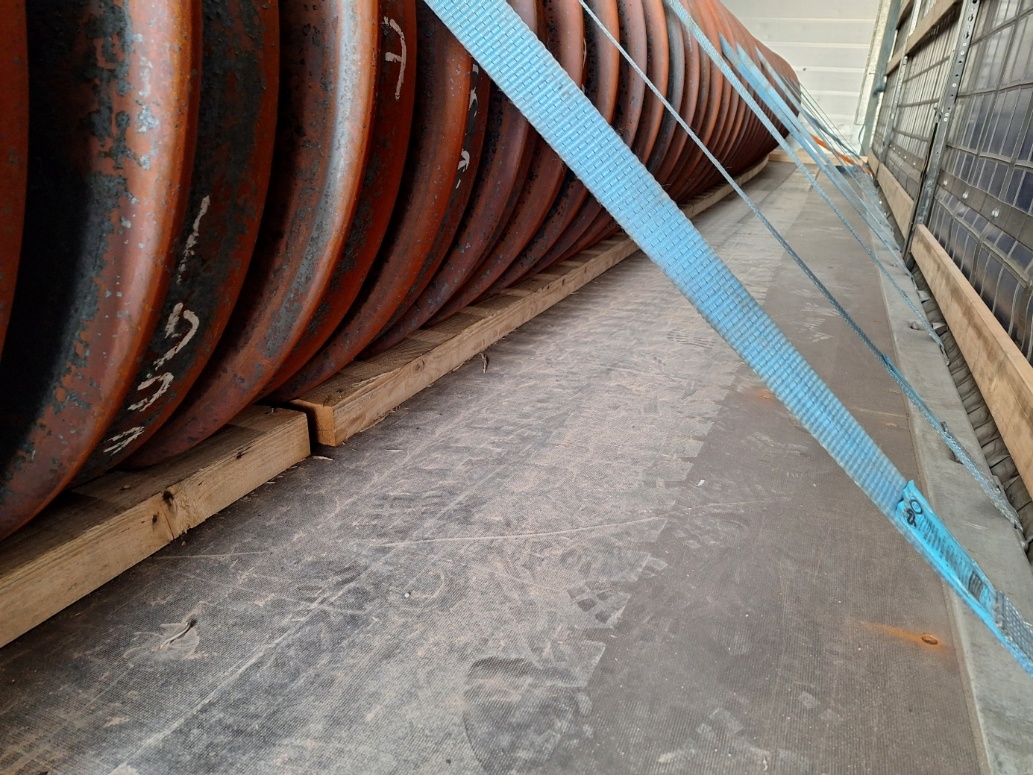
Figure 2 [Raymond Lausberg]
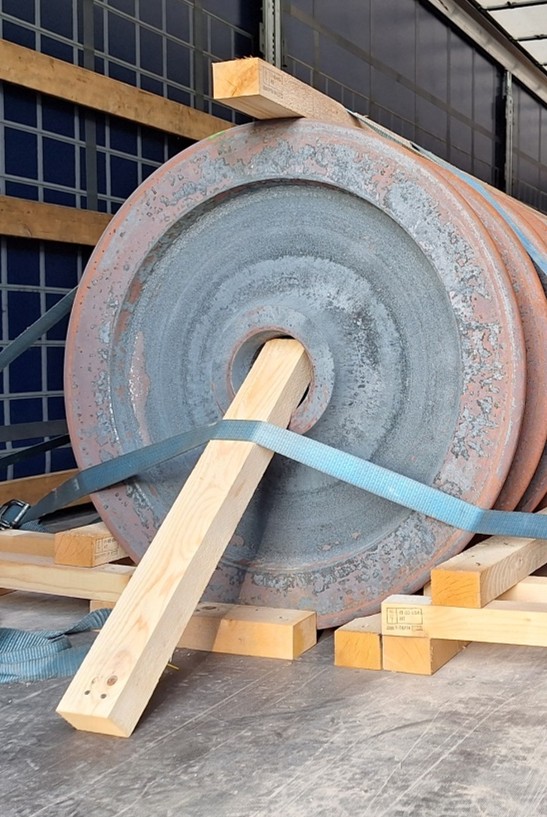
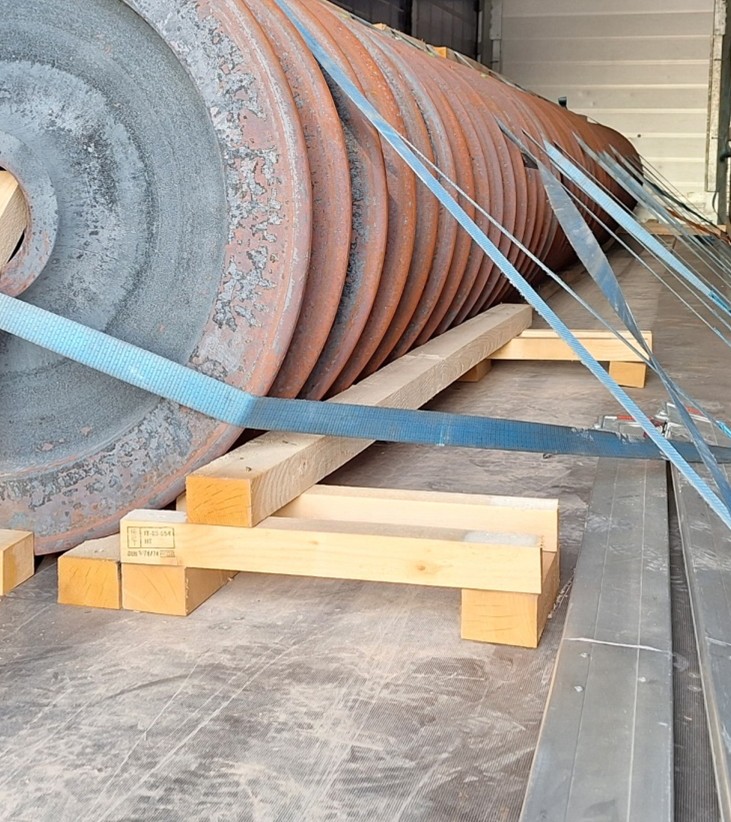
Figures 3 and 4 [Raymond Lausberg]
A closer look shows that the structure was not built in the same way along the entire length of the load. What is more, the wooden beams that were used were nailed directly into the loading bed.
As they continued their inspection, the officers found that the trailer was equipped with a 28-mm-thick structured, laminated floor. Such floors are totally unsuitable for being nailed into.
Annex 7, Section 2.3.5 of the CTU Code 2014 expressly states that wooden floors of closed CTUs are generally not suitable for nailing. This is because the material used is not particularly thick, meaning that it is unable to develop sufficient withdrawal resistance for nails.
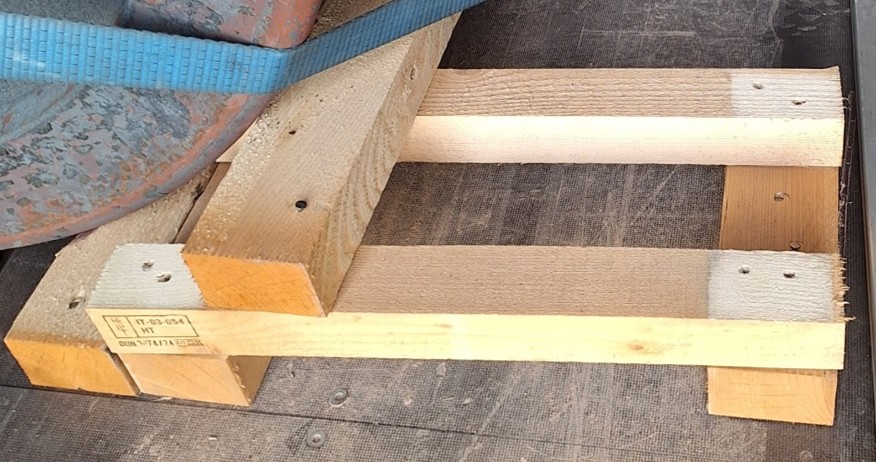
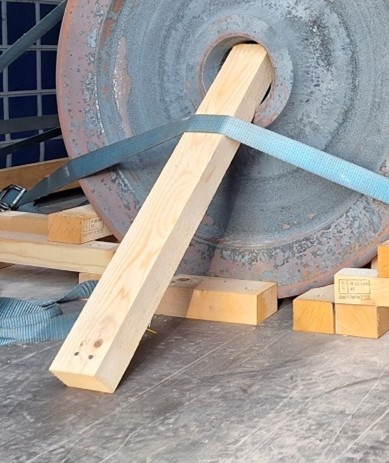
Figures 5 and 6 [Raymond Lausberg]
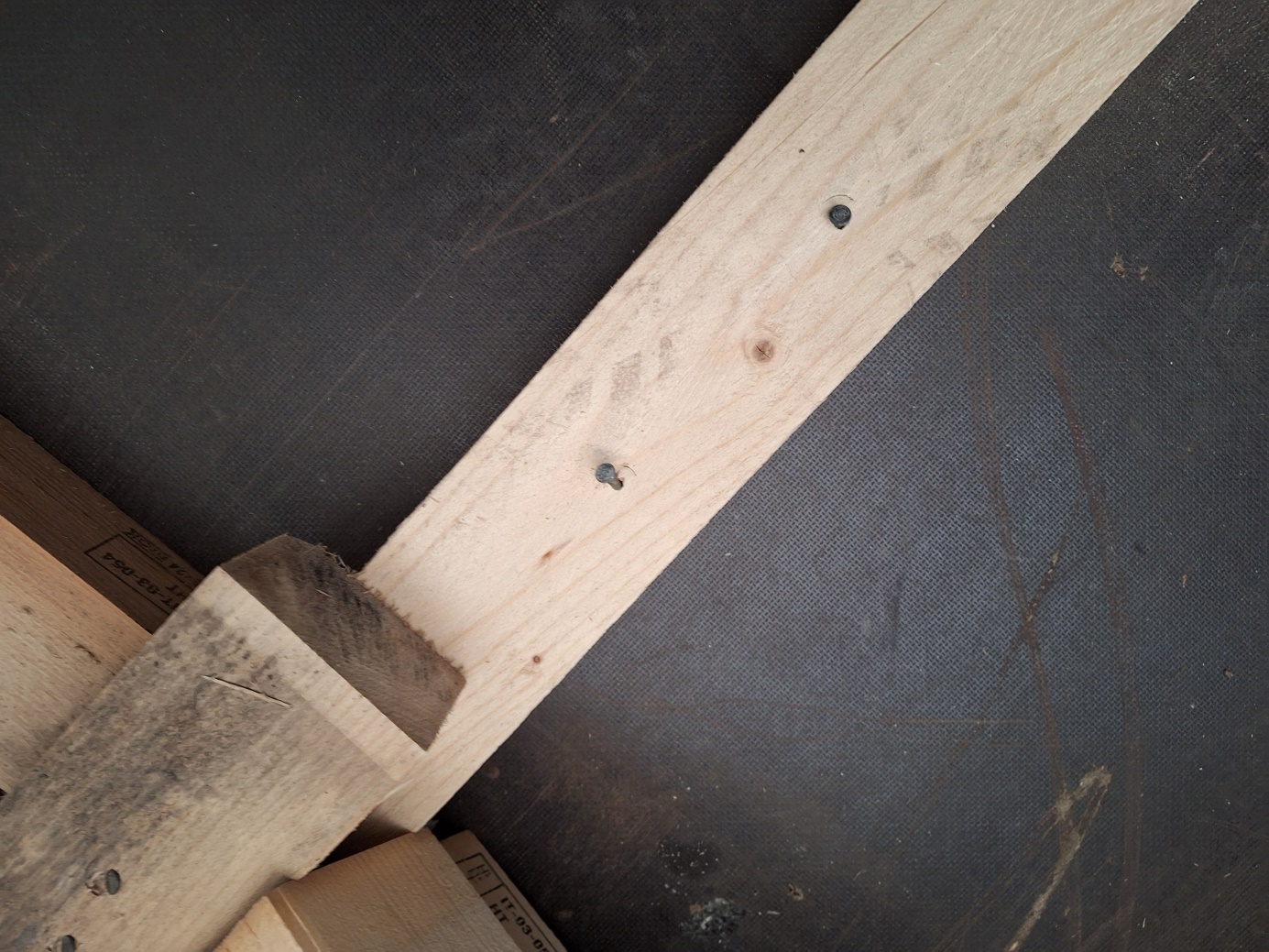
Figure 7 [Raymond Lausberg]
The methods used to block the cargo also raised a number of questions. These included the use of obliquely nailed wooden beams intended to stop the cargo from moving. Given the photos available to us, it is impossible to say whether the head loops that had also been attached would have done much to help secure the load in the event of an emergency braking maneuver.
Overview of the load
The load was secured with a total of 13 tie-down lashings (long-lever ratchet handles, pretensioning force (STF) 500 daN). However, these lashings had only a limited securing effect due to their shallow lashing angle of less than 60°.
Additionally, there was also one head loop in and one against the direction of travel.
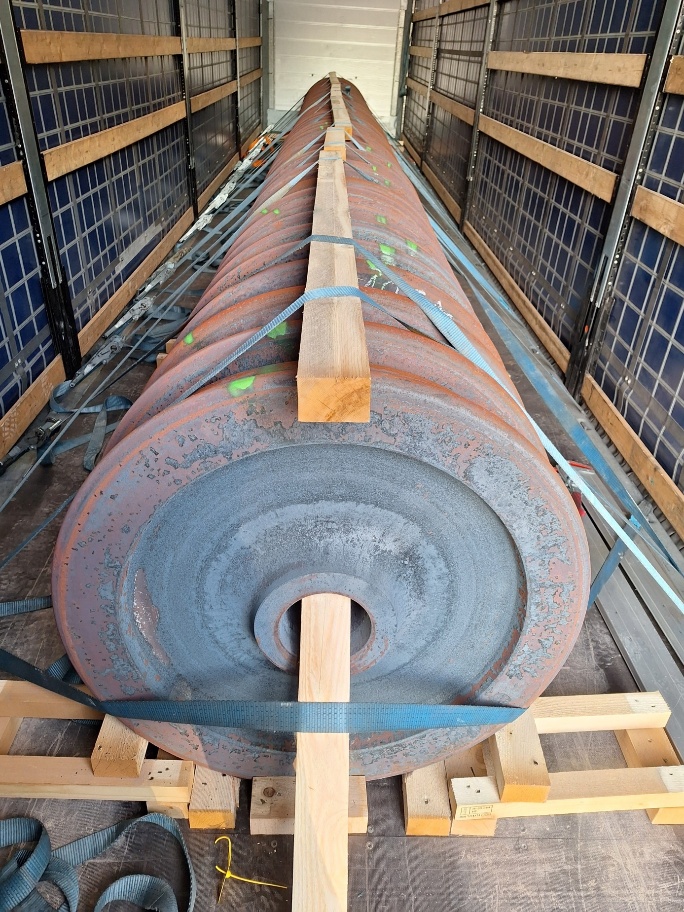
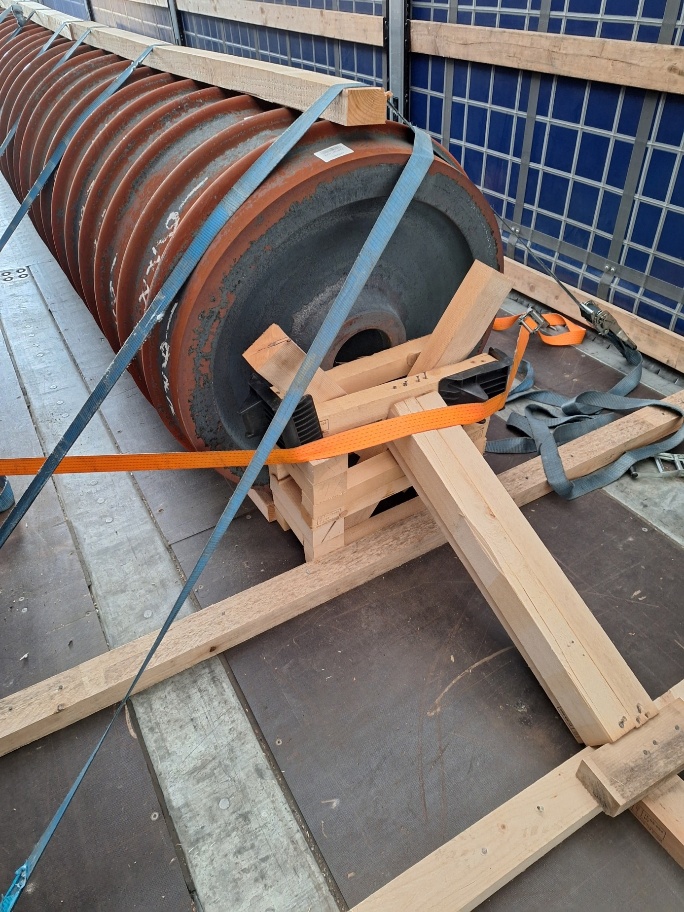
Figures 8 and 9 [Raymond Lausberg]
Against the direction of travel, a beam nailed to the loading bed was intended to stop the load from sliding backwards. In addition, another beam had been inserted into the hub aperture of one of the railway wheels, with its other end then being nailed to the loading bed. There was also a lashing belt used to form a head loop.
The load was secured in a similar way in the direction of travel. A timber structure reaching approximately half-way up the railway wheel had been assembled in front of the load. A beam had been positioned across the entire width of the loading surface in order to fix this structure to the bed. The structure was additionally held in position by a diagonal prop, whose own support piece had also been nailed in place.
There was another diagonal prop installed at the front, once again supported by a board that had been nailed to the floor. This crosspiece was also braced forwards against the end wall. (See Photo 10)
The effectiveness of the entire structure therefore depended to a very large extent on the nails hammered into the structured, laminated floor. However, this was precisely one of the major weaknesses of this method of load securing.
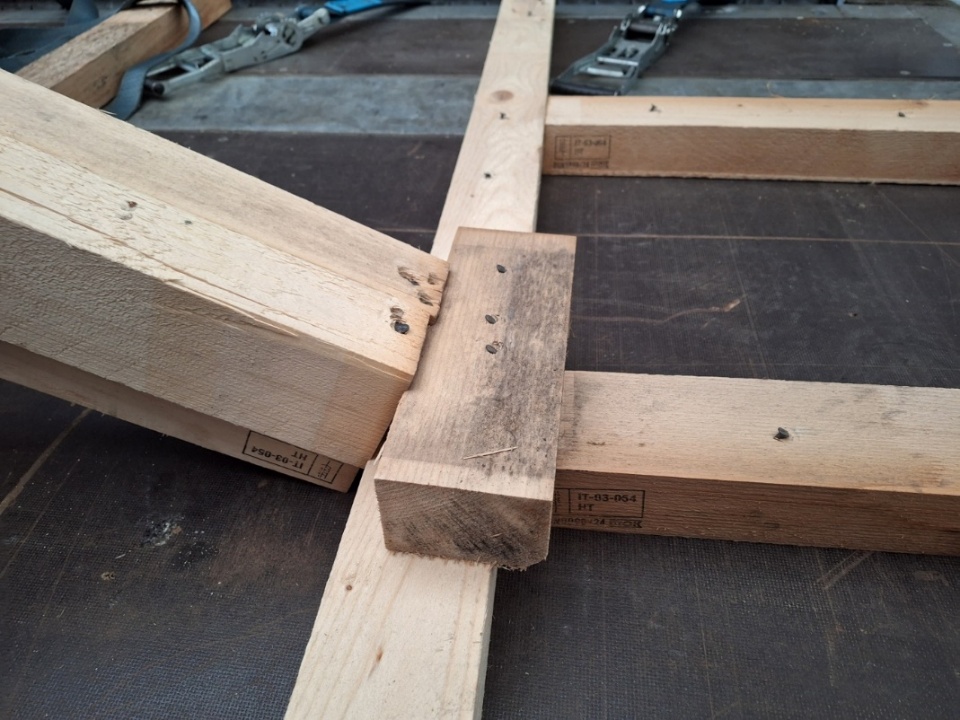
Figure 10 [Raymond Lausberg]
A closer look at the employed lashing equipment confirms the initial impression. Here again, the way it was used did not suggest a professional approach to load securing.
The damage to the lashing belts can be clearly seen in Figures 11 to 14. Once it is damaged, lashing equipment should not be used again, because its load-bearing capacity is no longer guaranteed.
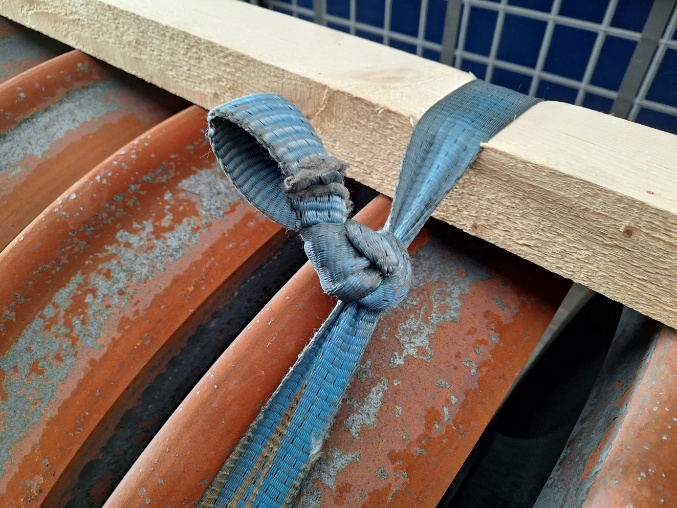
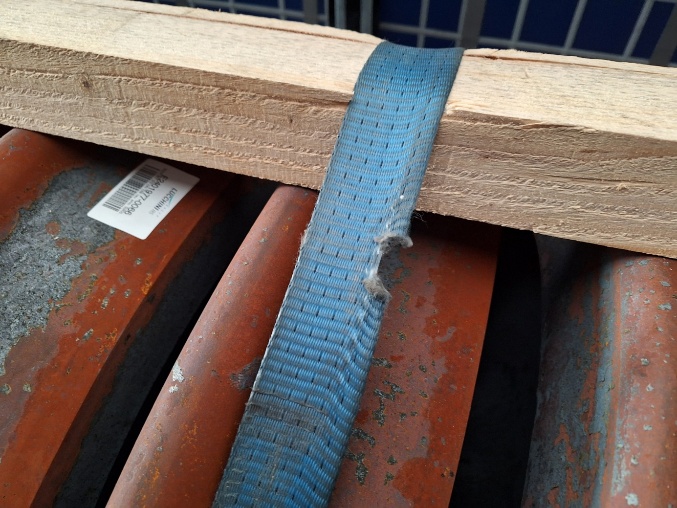
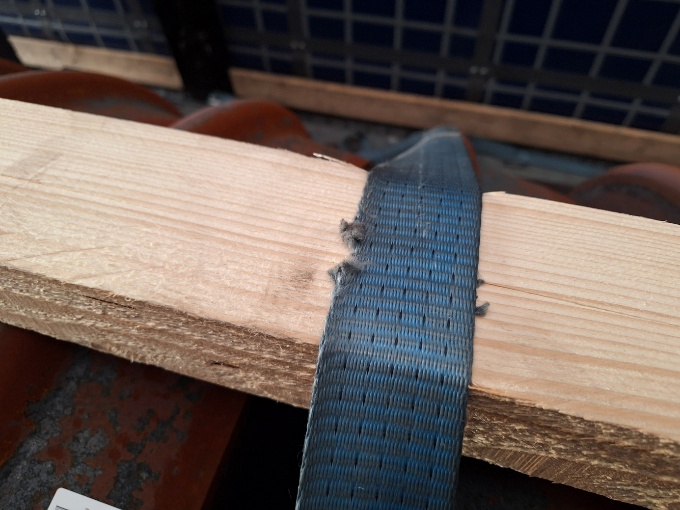
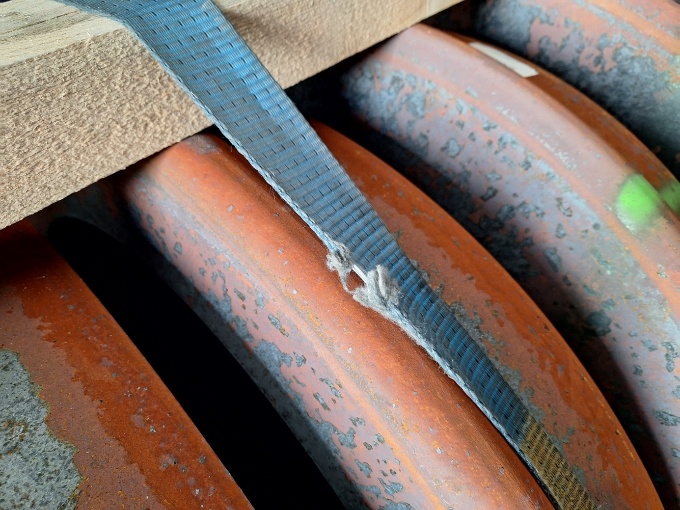
Figures 11, 12, 13 and 14 [Raymond Lausberg]
How could the load have been secured?
To secure the load effectively, it is first necessary to form a suitable load unit. The best way to secure railway wheels of this size is to use a stable mounting or a transport frame that securely absorbs the force and prevents the wheels from rolling.
The use of a timber blocking structure presupposes that this structure itself possesses sufficient load-bearing strength and that it can also be permanently attached to the loading surface. If this type of design is not possible, then it is necessary to use other securing measures.
A suitable frame should support the railway wheels in such a way that they do not touch the loading bed. Oblique contact surfaces that are adapted to the curvature of the wheels have proved their worth in the past. If the direction in which the wheels would roll is perpendicular to the direction of travel, then the angle of inclination should be at least 35°. The contact points must be designed in a way that reliably prevents the wheels from rolling.
The frame can then be positioned in the middle of the loading surface. Anti-slip material in perfect condition must be inserted between the loading bed and the frame. This makes it possible to achieve a high coefficient of friction, which greatly reduces the effort involved in securing the load.
Suitable tie-down lashings are needed to ensure a coefficient of friction of µ=0.6. The load is then adequately secured both to the side and against the direction of travel. To secure the load in the direction of travel it is necessary to establish a tight fit. This is possible using a head lashing while, for example, simultaneously blocking the load against the end wall.
The load securing columnists at the KLSK and GDV wish you all a bearable summer.
Back to beginning