



| Photo of the Month – May 2026 |
[German version] |
Inconspicuous but full of dire consequences – when shifting loads mean more than just hard work
We have once again received some photos from Switzerland for our “Photo of the Month” column.
Exactly one year after the last batch, here is another container which seems pretty inconspicuous at first sight.
Just like last year, there is no visible external damage to the container.
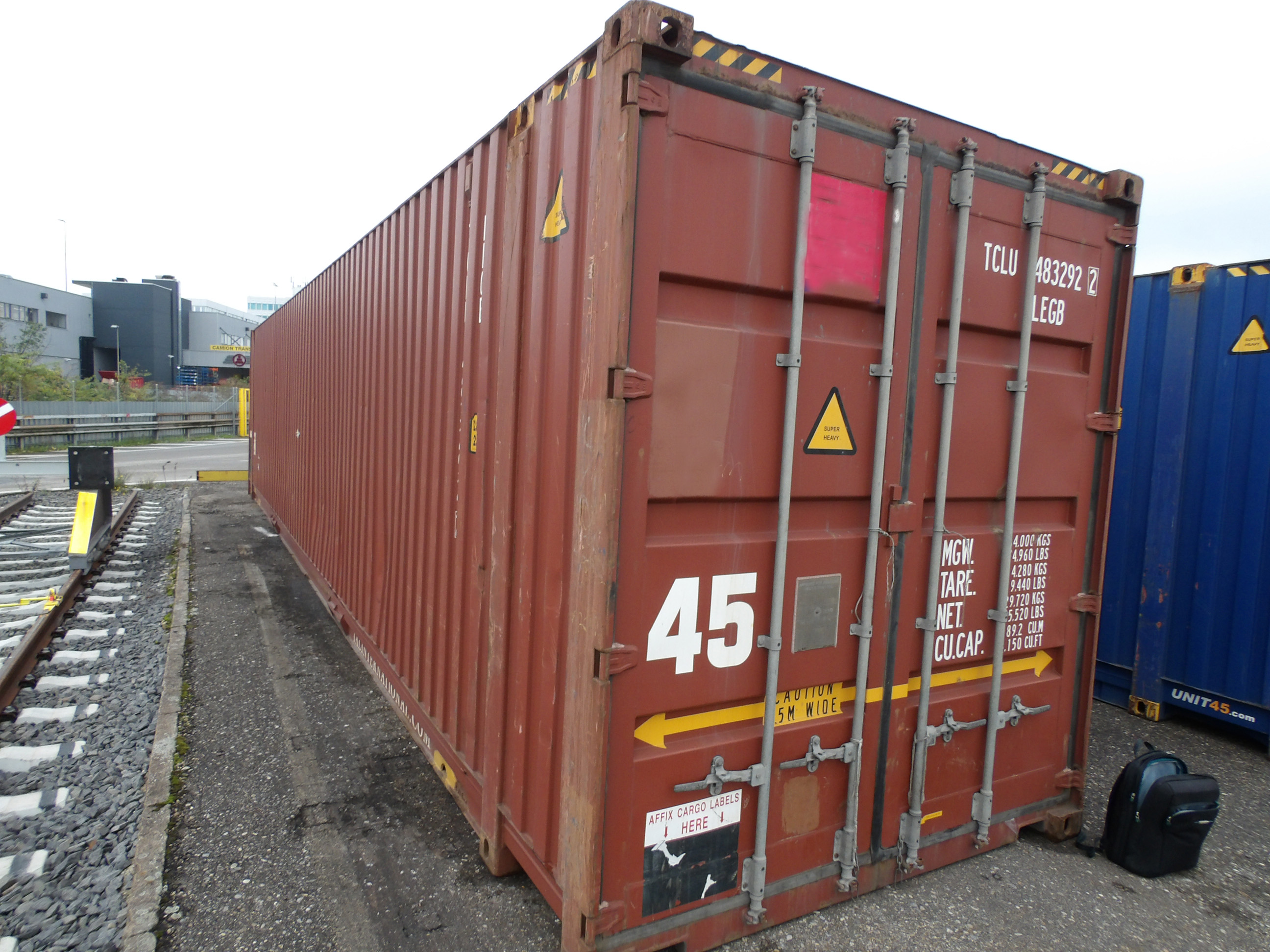
Figure 1 [Double S Solutions AG]
Inside, however, the load has once again shifted. For safety reasons, the rail operator again removed the container from the train. This was the scene when the container was opened:
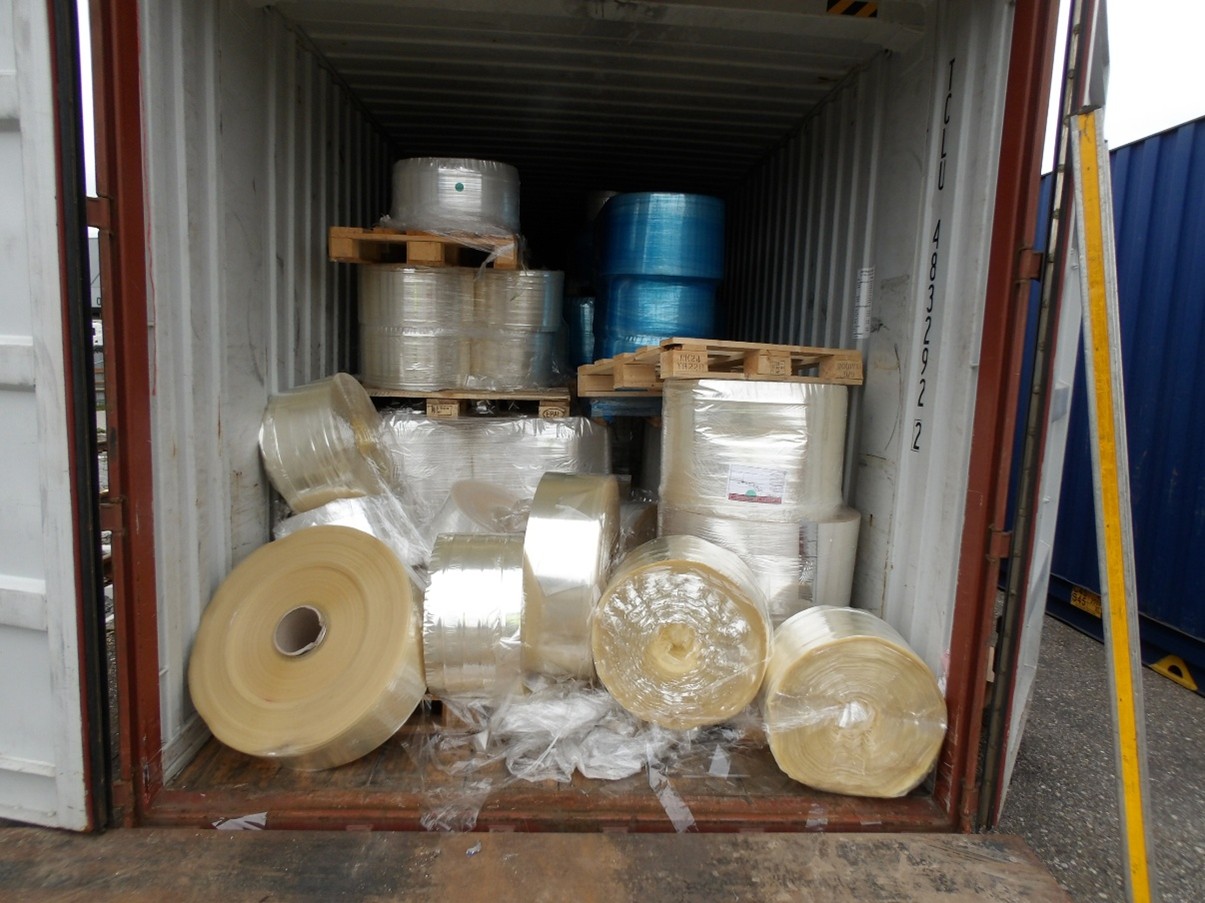
Figure 2 [Double S Solutions AG]
This clearly tells us what happened:
- The load units have obviously moved.
- The securing of the load units has not held.
- There is no evidence of any effective load securing.
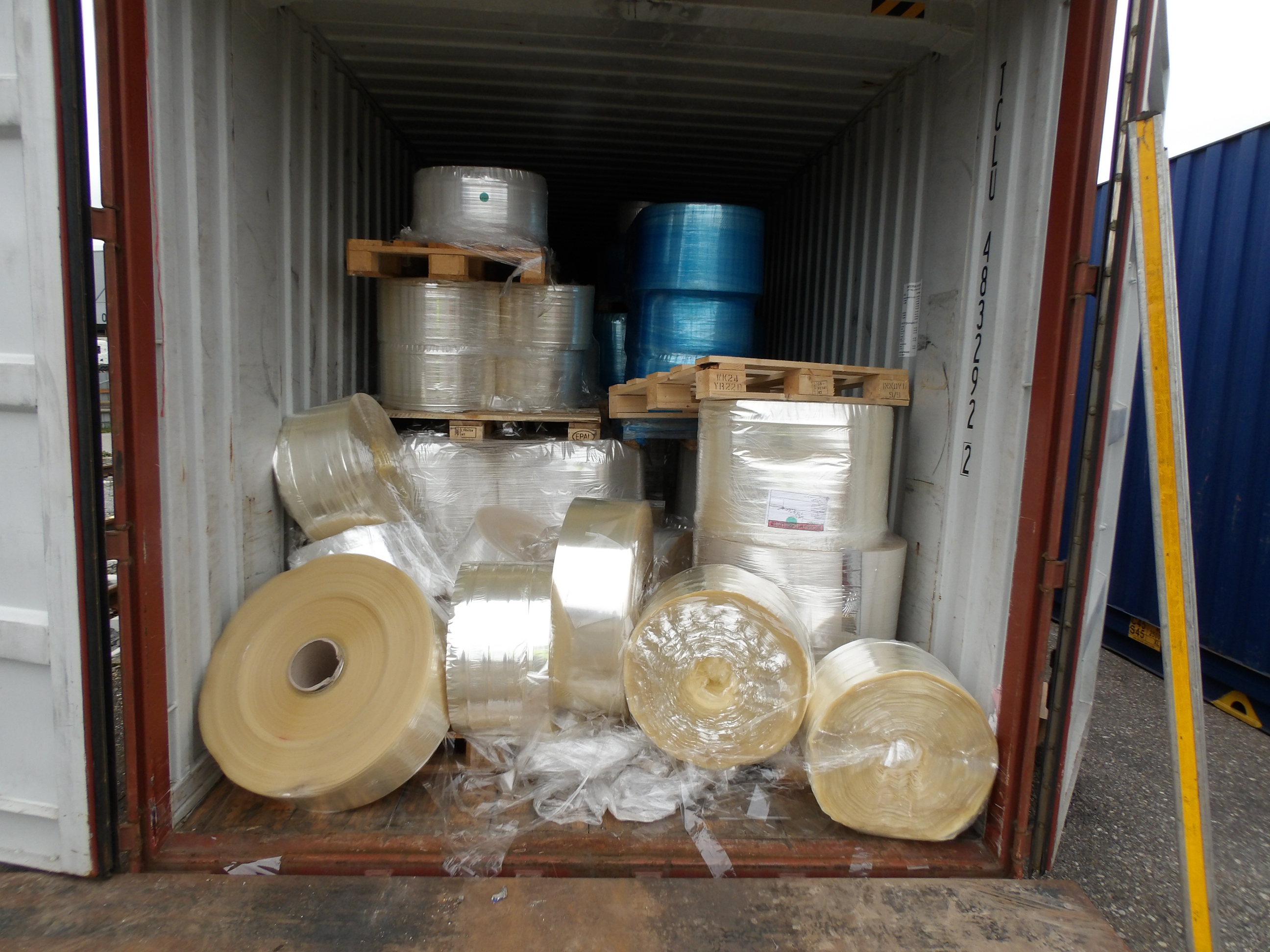
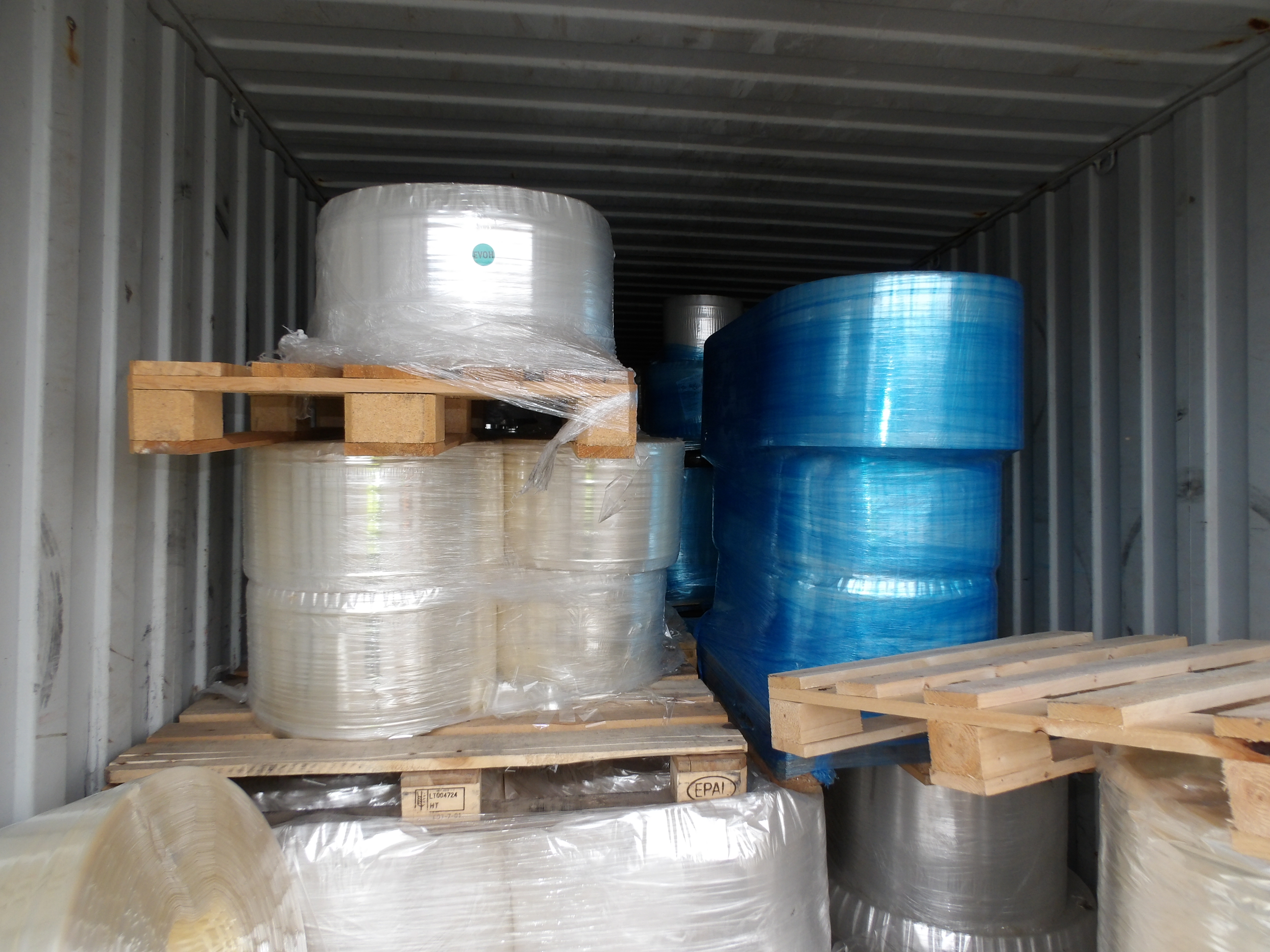
Figures 3 and 4 [Double S Solutions AG]
Unlike last year, there were not only extra costs – for example additional rail expenses, vehicle inspections, reloading and new load securing measures – but also damage to the goods themselves. The rolls have slipped and, in some cases, have fallen off the load units and are lying higgledy-piggledy in the container.
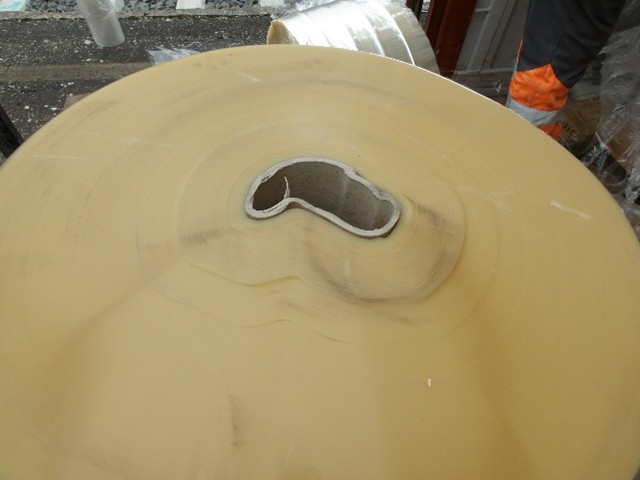
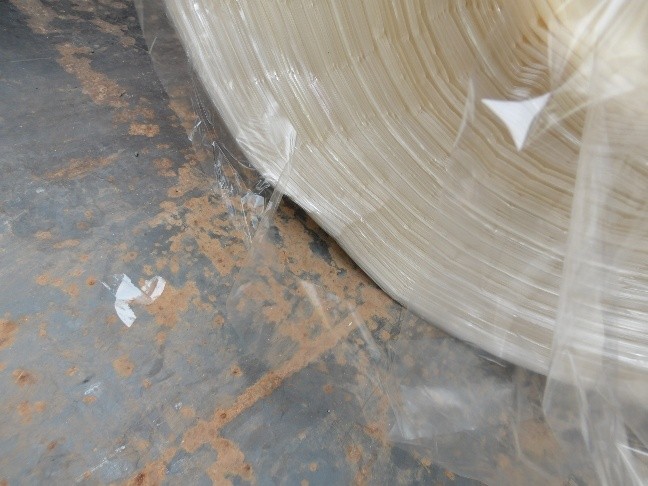
Figures 5 and 6 [Double S Solutions AG]
Where is the problem?
The goods were damaged when the rolls slipped in response to the normal acceleration experienced during transport. At the same time, the center of gravity of the load within the container shifted.
The result: Uneven loading of the carriage’s wheels.
The Swiss rail operators monitor these wheel loads very precisely. If a critical discrepancy is identified, then this is considered to constitute a safety risk – in particular when the train has to pass through sections of tunnel. In such cases, the affected carriage is removed from the train in an “intervention yard”.
Once again, the load was not allowed to continue on its way. The container had to be unloaded and then reloaded.
The consequences
Unlike last year’s incident, this time there were not only organizational and logistical expenses, but also real damage to the goods.
Overview of the consequences:
- Removal of the wagon in the intervention yard
- Unloading and reloading of the container
- Additional load securing work
- Detention charges and delays
- Technical inspection of the wagon
- Damage to the rolls of plastic film due to deformation and the effects of pressure
The loss therefore extended beyond the simple reloading costs and affected the goods themselves. The cost of the damage to the goods alone represented approximately €50,000.
How could this incident have been prevented?
As is so often the case, the cause of the problem lay in the loading.
A glance at the CTU Code makes the most important points clear:
1. Secure the load against moving
It is not enough just to place the load in the container and leave it there. The following measures are necessary:
- The load must be secured as a tight fit (e.g. using blocking mechanisms)
- Anti-slip materials must be placed below and between the load units
- Lashing equipment must be used wherever needed
In the current case, the rolls of film were able to move freely – with the consequences described above.
Various regulations and guidelines are available to help operators load goods correctly.
One practical guide is the CTU Code, which is available free of charge and offers practical assistance in Annex 7 (in the future, this will be Annex 10). The following figures show just a few examples from the CTU Code:
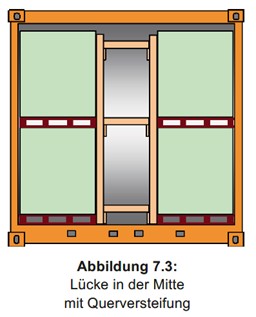
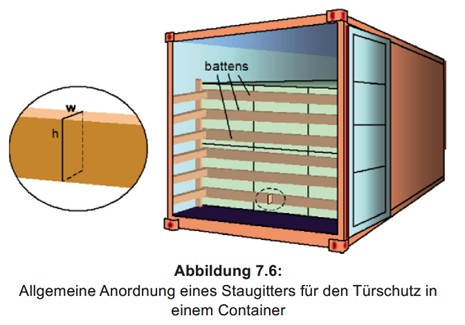
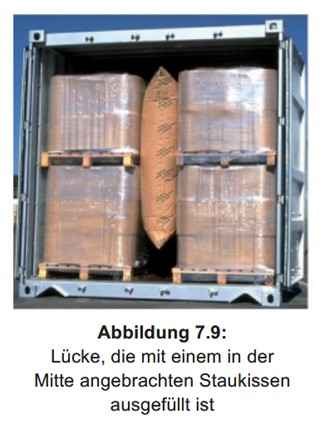
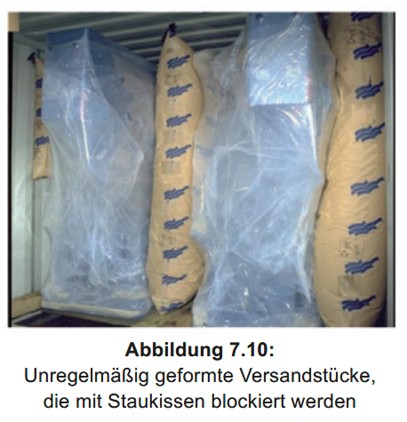
Figures 7 – 10 [CTU Code Annex 7]
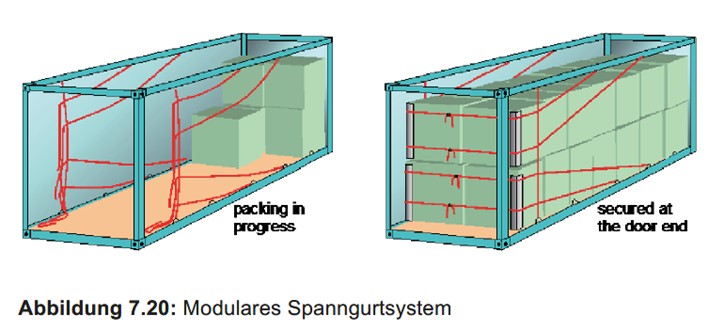
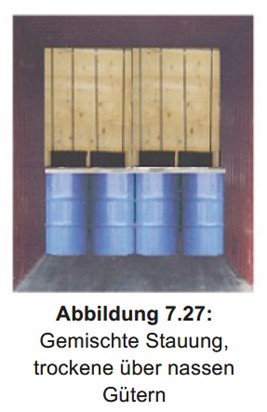
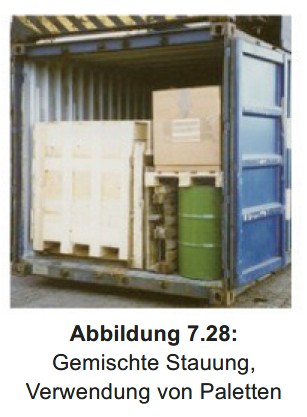
Figures 11 – 13 [CTU Code Annex 7]
2. Ensure that the center of gravity is located correctly
The load must be distributed in such a way that the center of gravity is in the middle.
The CTU Code specifies clear limits in this respect:
Maximum ±5 % deviation from the container width.
In a standard container, this means:
Only a deviation of approximately 12 cm from the midline is permitted.
In the case presented here, the shift in the load during transport caused the center of gravity to move.
For information on calculating the center of gravity, please see the “Photo of the Month” of May 2025: https://www.tis-gdv.de/tis/foto/2025-2/2025-05/
Conclusion
The present case shows two things very clearly:
- As soon as things start to move, the risk of real damage to the cargo increases dramatically.
- The change in center of gravity that results is also not without consequences – even if the container looks undamaged from the outside.
Unlike last year’s incident, the goods themselves were also damaged in the present case.
As always, the critical points are:
- Secure the load as a tight fit
- Make sure that the load cannot move inside the container
- Ensure that the center of gravity is located correctly
By paying attention to these points, you avoid not only painful discussions in the intervention yard – but also, and most importantly, damage to the goods.
Note:
The most recent officially published version of the CTU Code can be downloaded free of charge via the following link:
This link takes you to the UNECE website. After answering a few anonymous questions, you can download the CTU Code in the following languages: English (original), Arabic, Chinese, French, Russian, Spanish and German.
From your loss preventers at GDV.
Back to beginning