



| Photo of the Month – April 2026 |
[German version] |
Steel plates as bulk cargo
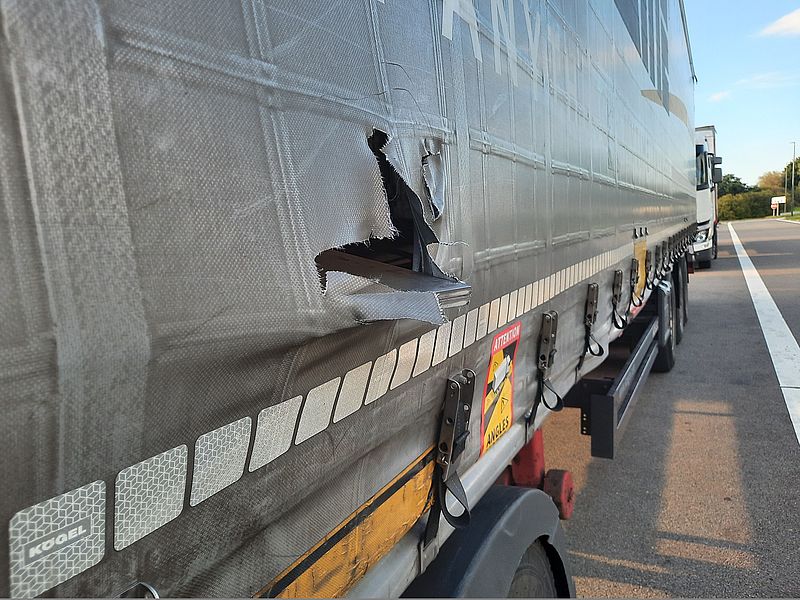
Figure 1 [Raymond Lausberg]
In the Netherlands, two trucks were loaded in parallel with offcuts of steel plates and then sent on their way towards Belgium. This was a multinational transport operation of the sort that takes place so frequently on our motorways.
Alongside the French carrier, the Dutch loader and client, a Lithuanian transport operator and a Belgian recipient, there were also drivers from third-countries (Belarus). All of which presumably means that communication problems were unavoidable.
However, it is clear that the loader did not prepare stable load units. Instead, the steel plates, which were of all shapes and sizes (width – length – thickness), were simply stacked on top of one another. As the following photos clearly show, this load, which weighed approximately 20 tonnes, was secured with no more than tie-down lashings. Anti-slip mats were either omitted altogether or used inefficiently. No effort was made to load the cargo as a tight fit. At the Cheratte (Belgium) intersection of the E25 motorway from Maastricht in the direction of the E40 towards Aachen, the first of the two trucks had to brake due to the surrounding traffic.
The catastrophic way the load was secured meant that the entire cargo started slipping forwards. There was one stroke of good fortune in that the load remained on the trailer’s loading bed. Only two of the plates broke through the tarpaulin on the left, with the result that they could be easily seen from the outside.
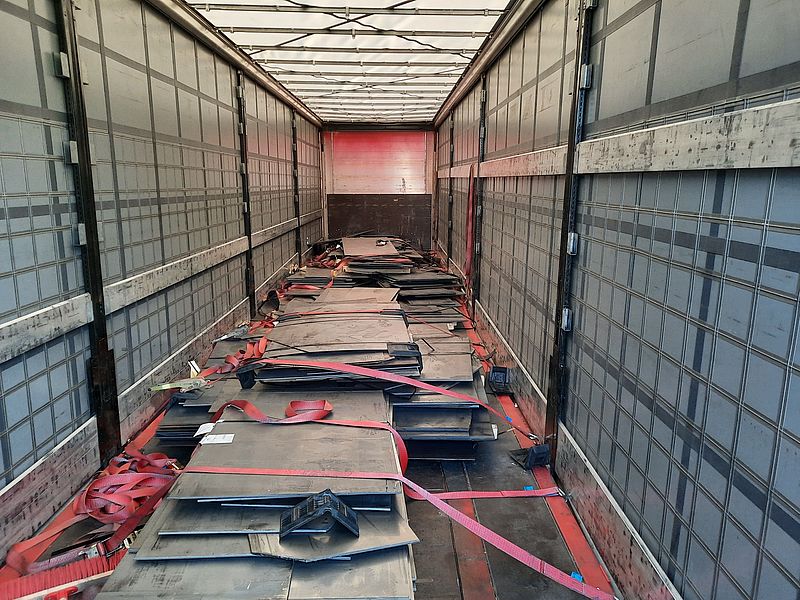
Figure 2 [Raymond Lausberg]
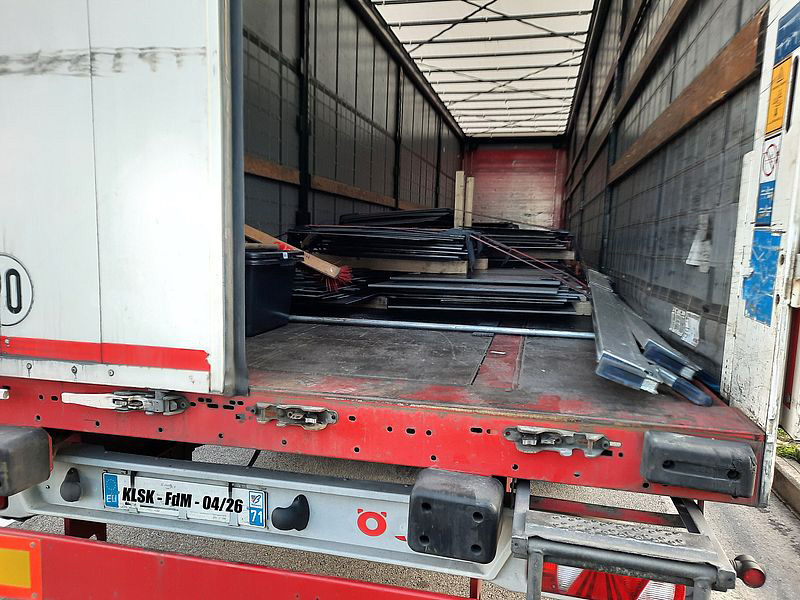
Figure 3 [Raymond Lausberg]
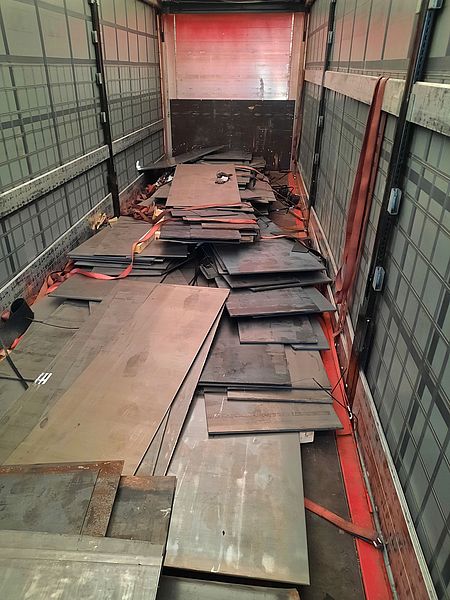
Figure 4 [Raymond Lausberg]
As the next two photos clearly show, the original, inadequate securing measures were equally amateurish in the second vehicle.
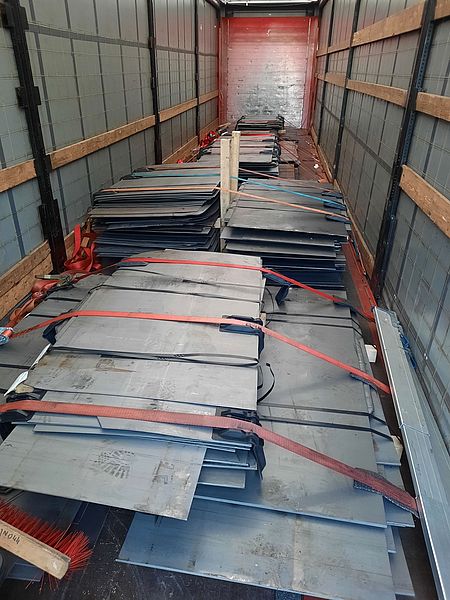
Figure 5 [Raymond Lausberg]
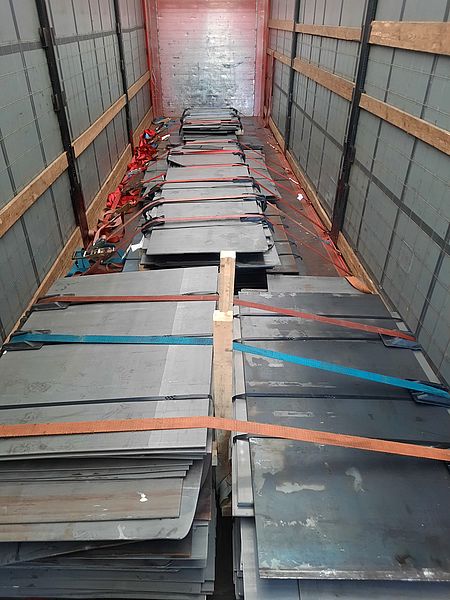
Figure 6 [Raymond Lausberg]
The driver of the first vehicle was instructed to open the side tarpaulin. Two plates immediately took advantage of this opportunity to slide off the edge of the trailer.
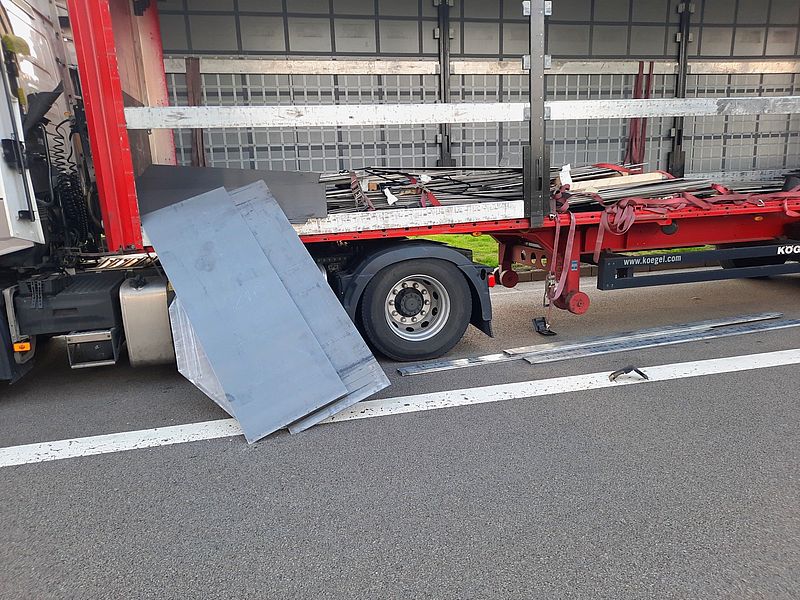
Figure 7 [Raymond Lausberg]
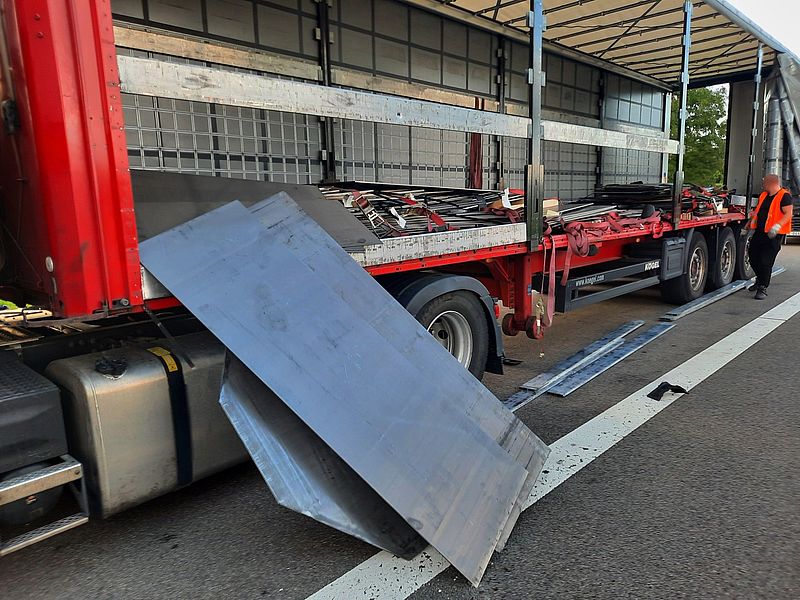
Figure 8 [Raymond Lausberg]
From the following photos, it is immediately obvious that not even a well-trained driver would be able to secure such abominable load units.
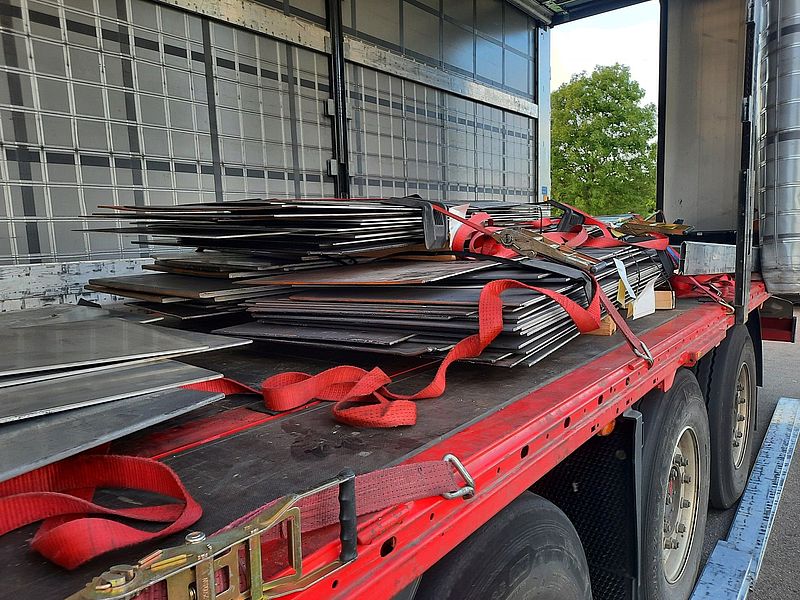
Figure 9 [Raymond Lausberg]
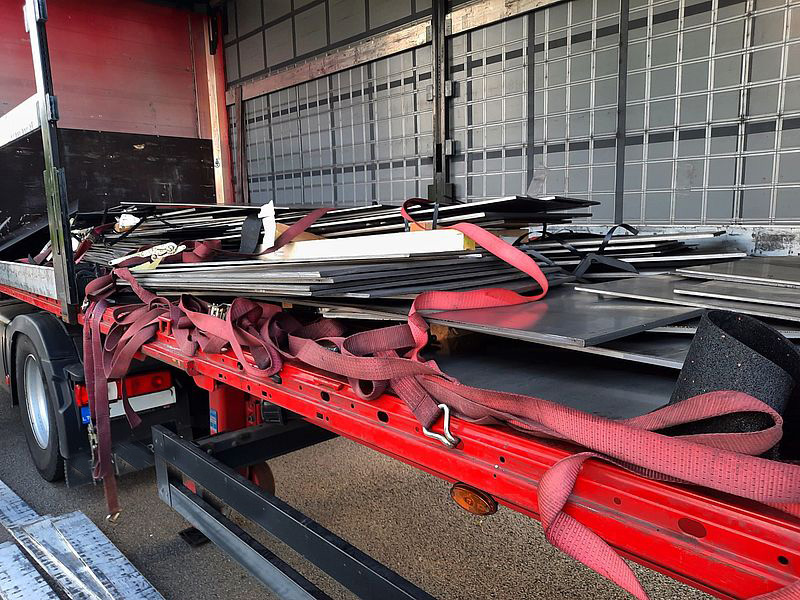
Figure 10 [Raymond Lausberg]
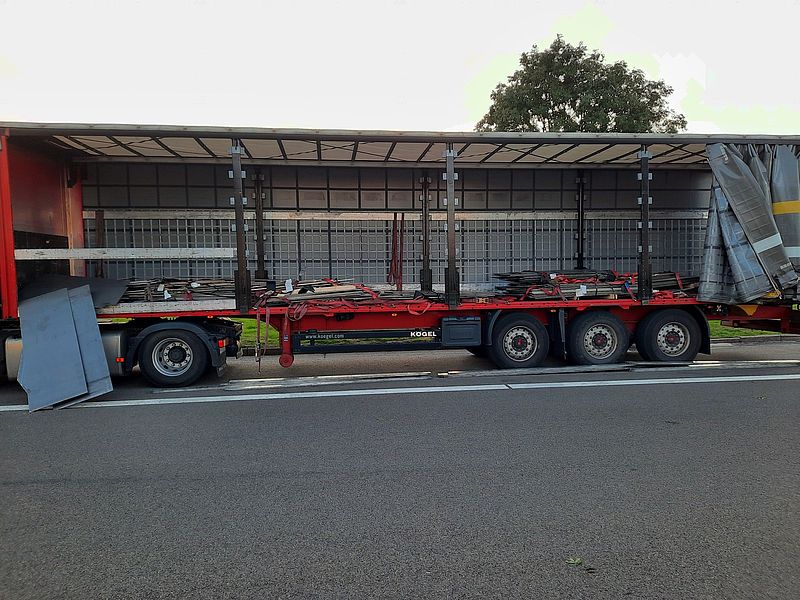
Figure 11 [Raymond Lausberg]
Below are a number of photos from the second vehicle which had even your hard-boiled load securing columnists shaking their heads ….
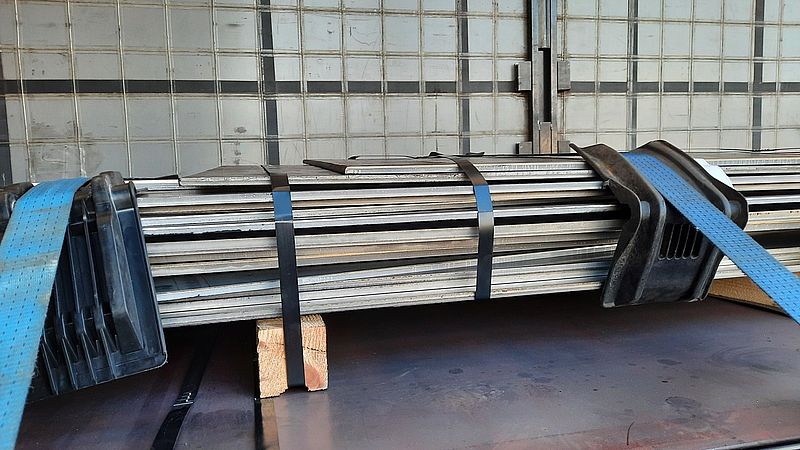
Figure 12 [Raymond Lausberg]
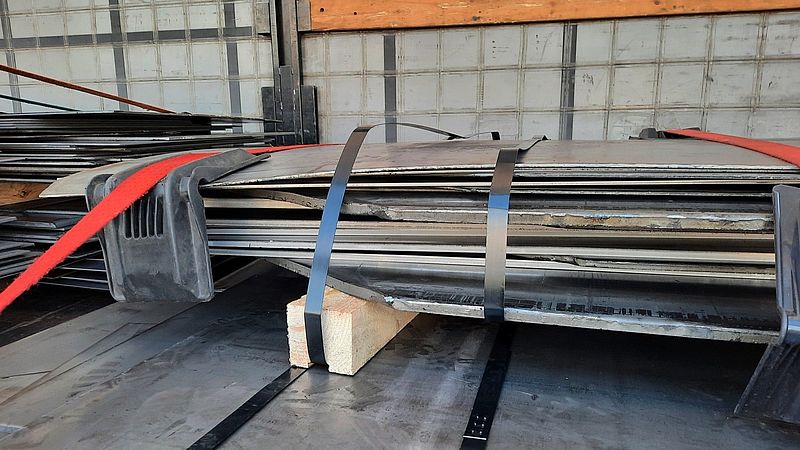
Figure 13 [Raymond Lausberg]
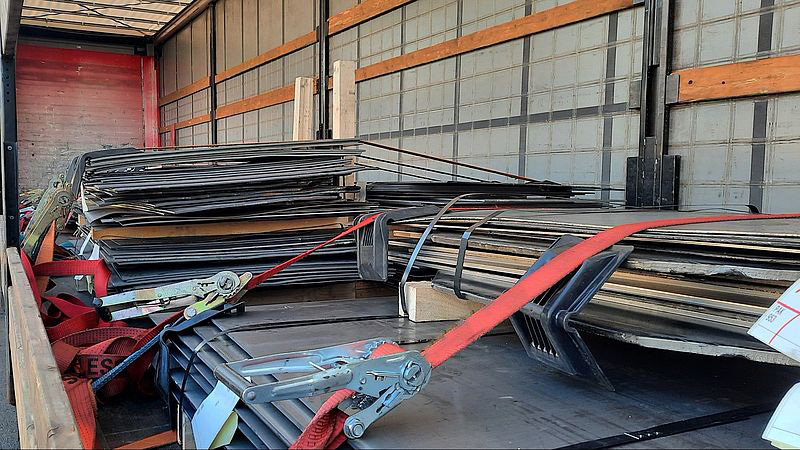
Figure 14 [Raymond Lausberg]
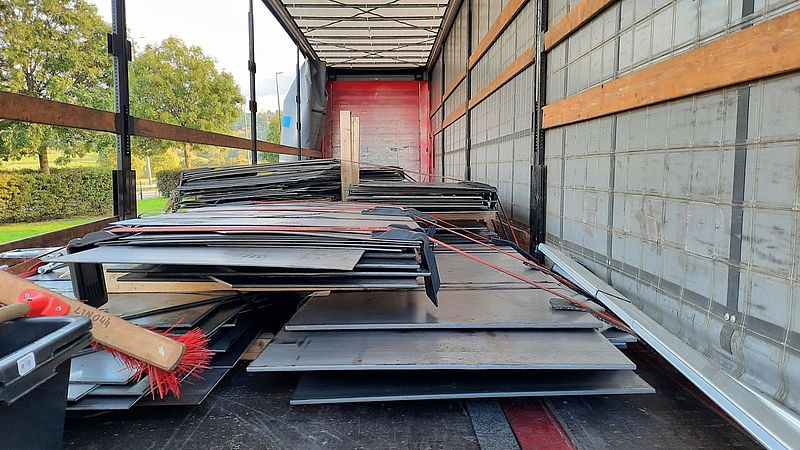
Figure 15 [Raymond Lausberg]
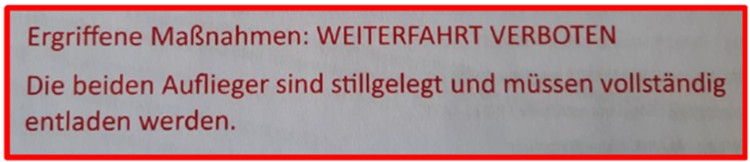
In addition to the totally inadequate load securing measures, infringements of the regulations concerning driving and rest times were also uncovered. In total, the fines amounted to over €7,500.
The transporter also arranged for a damage assessor to visit the scene.
It took a whole week before the vehicles were permitted to continue on their way.
The overall cost of this unprofessional, irresponsible approach to loading probably ran into the middle five-figure range. We can only hope that the fines will have had an effect and that the parties involved will refrain from taking to the road in such a dangerous state in the future.
Your load securing columnists wish you all a safe and enjoyable April.
++++++++++++++++++++++++++++++++++++++++++++++++++++++++++++++++++++++
PS: In connection with the issue discussed here, we recommend that you read a presentation that can be found on the TIS-GDV information pages: Presentation
This shows how even when dealing with “packaged goods” – in this case, once again steel plates – attention to detail is important for safe cargo transport. Simple observation clearly illustrates the logical link between packaging, stowage and load securing.
From your loss preventers at GDV.
Back to beginning